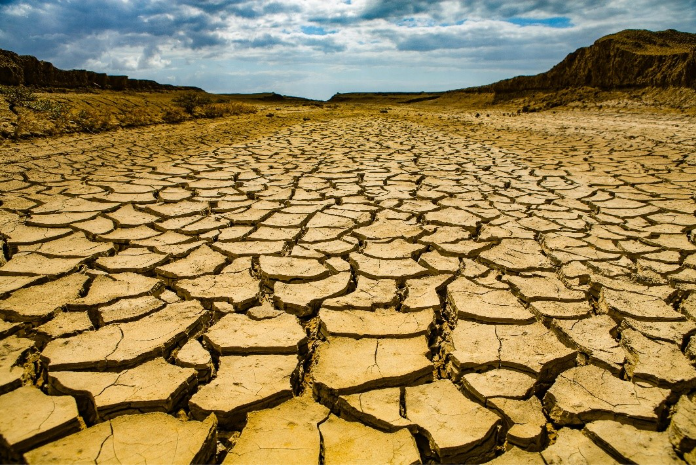
Why do humans struggle to respond to disasters that unfold gradually? I’m taking a deep dive into the psychology of living through a catastrophe that doesn’t arrive all at once.
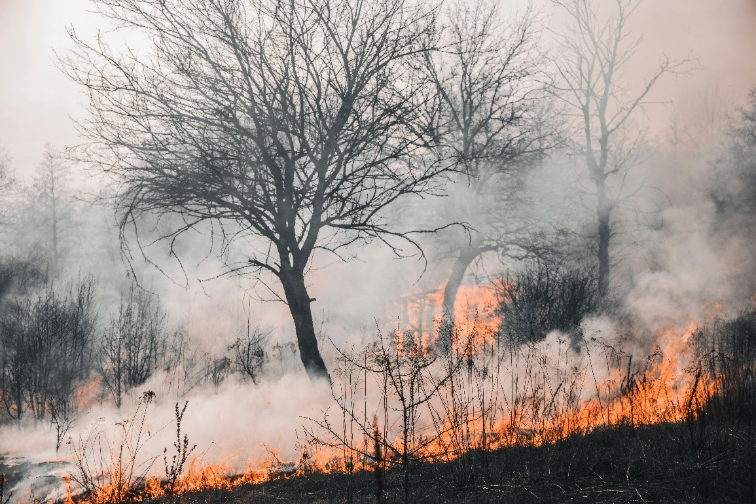
Australians know what an emergency looks like: A bushfire racing across a ridge line. A cyclone bearing down on the coast. A flood swallowing roads and isolating entire communities. These events are immediate, dramatic and impossible to ignore. Emergency services mobilise, news coverage intensifies, and people act quickly.
But what happens when the emergency arrives quietly?
What happens when the danger unfolds so slowly that most people barely notice it happening?
The greatest threats facing modern civilisation are increasingly not sudden disasters, but gradual ones. Climate change, biodiversity loss, soil degradation, freshwater depletion and ecological decline are not single events. They are long-term processes that develop over decades, often beneath the threshold of public attention.
This is the challenge of the slow emergency.
Unlike a cyclone or bushfire, slow emergencies rarely trigger an immediate survival response. They emerge gradually, normalise themselves over time, and often become visible only once significant damage has already occurred.
Understanding why humans struggle to respond to these threats may be one of the defining challenges of the twenty-first century.
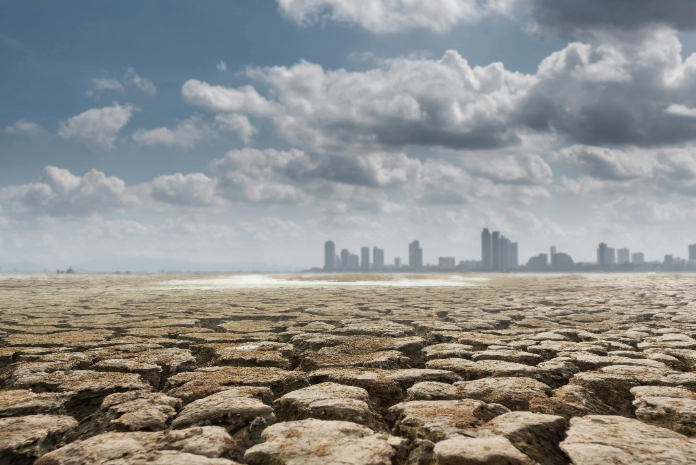
The human brain was built for immediate danger
For most of human history, danger was immediate.
A predator hiding nearby.
A rival tribe approaching.
A violent storm gathering overhead.
The humans who survived were not necessarily the most intelligent. They were the ones who reacted quickly enough to visible threats.
As a result, the human brain became highly responsive to urgency. When confronted with immediate danger, our nervous systems activate automatically. Adrenaline rises, attention sharpens, and action follows. This survival mechanism served humanity remarkably well for thousands of years. The problem is that modern environmental threats do not operate on the same timescale.
Climate change does not chase us across a savannah. Species extinction does not leap from behind a tree. Soil degradation does not trigger a fight-or-flight response.
Instead, these threats develop incrementally, year after year, often without dramatic moments that force widespread public attention.
Psychologists have long observed that humans are poor at responding to slow-moving risks. We naturally prioritise immediate concerns over distant ones, even when the long-term consequences are far more serious.
Paying next month’s mortgage feels more urgent than considering sea-level rise decades from now. Managing today’s fuel prices feels more pressing than thinking about long-term energy security. The future constantly loses the competition for our attention. Not because people are irrational, but because human psychology evolved for a very different world.
The tyranny of normal
One of the most powerful psychological barriers to recognising slow emergencies is something known as normalcy bias.
Normalcy bias is the tendency to assume that life will continue functioning much as it always has. We expect tomorrow to resemble today because, for most of our lives, it usually does. This expectation provides stability and helps people navigate an increasingly complex world. However, it also creates a dangerous blind spot.
When change occurs gradually, humans adapt to each small shift and incorporate it into their understanding of what is normal, such as a hotter summer, a longer drought or more frequent flooding becoming the new normal.
Over time, people stop recognising these changes as warning signs. The emergency fades into the background.
Imagine if Australia suddenly lost half its bird species overnight. The event would dominate headlines for months. Yet when the same decline occurs slowly over several decades, many people barely notice.
The outcome may be similar, but the perception is entirely different.
The shifting baseline problem
Closely related to normalcy bias is a phenomenon known as shifting baseline syndrome. Each generation unconsciously accepts the environmental conditions of its youth as normal.
If one generation grows up fishing in rivers teeming with life, that abundance becomes its baseline. If the next generation grows up with half as many fish, that diminished reality becomes theirs.
The decline continues, generation after generation.
Because no single generation experiences the full scale of the loss, the degradation is difficult to perceive fully. Australians have witnessed this repeatedly.
Older generations often remember landscapes filled with birdlife, insects and native wildlife that younger Australians rarely encounter today. Many recall country drives where windscreens became covered in insects after only a short journey. That experience is increasingly uncommon.
Yet younger generations may never recognise the difference because they lack a historical point of comparison.
The baseline shifts.
The loss becomes normal.
The emergency remains largely invisible.
Why facts alone rarely create action
One of the frustrations for scientists and researchers is that presenting evidence often fails to produce meaningful behavioural change.
The assumption seems logical: if people understand the facts, surely, they will respond appropriately.
But human beings are not purely rational creatures.
People make decisions not only through data, but through emotions, stories, identity and social influence.
A graph showing rising temperatures may be scientifically compelling, but it struggles to compete with immediate concerns such as financial pressure, family responsibilities and work stress. The human brain tends to convert abstract, long-term threats into background information.
Many people understand climate change intellectually. Far fewer experience it emotionally as an urgent reality. This disconnect between knowledge and emotional engagement is one reason slow emergencies remain politically and socially difficult to address.
The problem of delayed consequences
Another reason slow emergencies are difficult to confront is that causes and consequences are often separated by long periods of time.
Human beings respond best to immediate feedback. If touching a hot stove instantly burns your hand, the lesson is learned quickly. Environmental degradation rarely works that way.
The consequences emerge slowly and often appear disconnected from the original cause. Actions taken today may not reveal their full effects for decades. This delay creates the illusion that the risks are less serious than they truly are.
By the time the impacts become impossible to ignore, reversing them may be extraordinarily difficult or even impossible. History repeatedly demonstrates this pattern. Civilisations often exploit resources successfully for generations before suddenly encountering the limits of those systems.
When those limits finally become visible, the damage has usually been accumulating quietly for many years. The warning signs were present all along.
They simply failed to generate urgency.
Living inside the slow emergency
One of the strangest aspects of a slow emergency is that people rarely recognise they are living through one. Humans tend to imagine crises as future events — something dramatic that arrives suddenly and clearly.
Reality is often far messier. Slow emergencies rarely have a single beginning. There is no obvious moment when the crisis officially starts. No sirens sound. No announcement declares that a threshold has been crossed. Instead, people gradually realise the world around them has changed. The climate becomes less stable.
Ecosystems become less resilient.
Resources become less abundant.
The future feels less certain.
The emergency was never approaching.
It was already underway.
The cost of waiting
There is a common belief that humanity will act once problems become serious enough. History suggests otherwise. Humans often delay responding to major problems until the consequences become unavoidable. This pattern appears in public health, economics, politics and environmental management.
People postpone difficult decisions, assume conditions will improve or hope somebody else will solve the problem. Sometimes that works. Often it does not.
The danger with slow emergencies is that delay itself becomes part of the crisis. Every year of inaction narrows future options. Every year of environmental degradation makes recovery more difficult. Every year spent minimising the scale of the problem increases the magnitude of the eventual response required.
The longer society waits, the steeper the challenge becomes.
What humans can do better
1. Learn to think in trends
Humans naturally focus on isolated events, but the future is shaped by patterns. A single heatwave tells us little. A pattern of increasingly severe heatwaves tells us far more. Repeated record-breaking floods or prolonged droughts indicate broader shifts that demand attention. Learning to recognise long-term trends allows societies to identify problems before they become irreversible.
2. Adopt longer time horizons
Modern systems often operate on extremely short timescales. Businesses focus on quarterly profits; governments focus on election cycles, and media organisations focus on daily headlines.
Yet many of today’s greatest challenges unfold across decades. One important question society should ask more often is: “How will this decision affect people fifty years from now?”
Long-term thinking encourages stewardship rather than short-term exploitation.
3. Strengthen local resilience
Global crises can feel overwhelming, but local action feels achievable. Communities that strengthen local food systems, improve water security, restore ecosystems and support social cohesion are often better equipped to handle uncertainty. Resilience is not about predicting every future crisis. It is about building systems capable of adapting to disruption.
4. Reconnect with the natural world
Many people experience environmental decline only through statistics and headlines. Direct experience, however, often creates a deeper understanding.
Spending time in nature fosters awareness of ecological relationships, seasonal changes and environmental disruption. When people form meaningful connections with landscapes, rivers and ecosystems, they become more invested in protecting them. What people value, they are more likely to defend.
5. Tell better stories about the future
Fear may motivate short-term action, but fear alone is rarely sustainable. People need something to move towards, not simply something to fear. A sustainable future should not be framed only as sacrifice or restriction. It can also represent healthier communities, cleaner environments, stronger local economies and a better quality of life. Hope is not naïve. Hope is necessary. Without hope, people disengage. With hope, they participate.
The opportunity within the crisis
The slow emergency presents an enormous challenge, but it also offers an opportunity.
For perhaps the first time in history, humanity possesses the scientific knowledge, technological capability and global communication networks needed to recognise a large-scale problem before its worst consequences fully unfold.
That awareness provides a choice.
Society can continue reacting only when circumstances become unavoidable, or it can deliberately cultivate the qualities slow emergencies demand: foresight, patience, cooperation and long-term thinking.
The question is not whether change is coming.
Change is already here.
The real question is whether humanity can clearly recognise the scale of that change and respond before the window for meaningful action narrows further. History will not judge society solely by how it responded to the emergencies that arrived with sirens and headlines. It may instead judge how humanity responded to the crisis that unfolded quietly in the background while most people were distracted by the immediacy of daily life. The greatest challenge of the twenty-first century may not be surviving a sudden catastrophe. It may be recognising the catastrophe that arrives one ordinary day at a time. And perhaps the first step towards addressing any slow emergency is understanding that “slow” does not mean “distant.” It simply means there is still time to act — if society chooses to.