Climate action is constantly framed as something for later: later policy, later technology, later courage. I suggest we ask what perpetual postponement is costing us.
There is a strange contradiction at the heart of modern society. Most people agree that climate change is real. Most understand that ecosystems are under pressure, that weather patterns are becoming more unstable and that future generations will inherit a more uncertain world if current trends continue.
Yet despite decades of warnings, conferences, reports and promises, meaningful action continues to move at a painfully slow pace. The language surrounding climate action is almost always framed in the future tense. We will transition eventually. Technology will improve, governments will act, markets will adapt, and society will eventually change.
The future is treated like a waiting room — a place where solutions quietly mature while the present carries on largely unchanged. But there is a problem with constantly postponing the future. Eventually becomes later. Later becomes too late. And while humanity debates timelines, the costs continue accumulating in real time.
The politics of delay
One of the defining characteristics of climate change is not denial alone, but delay.
In many parts of the world, outright rejection of climate science has become less socially acceptable than it once was. Instead, a softer and more politically convenient narrative has emerged. Yes, climate change matters… But now is not the right time. The economy is too fragile. Energy prices are too high. Technology is not ready yet. Voters are not prepared. Industry needs more time. The conversation shifts from whether action is necessary to whether action is convenient.
And convenience is a dangerous standard for responding to a long-term crisis.
Historically, societies rarely make major structural changes when they feel comfortable doing so. Meaningful change usually occurs because postponement eventually becomes more costly than action itself. The challenge with climate change is that the consequences of delay are often gradual enough to remain politically tolerable — at least in the short term. A single heatwave can be dismissed as unusual weather. A flood becomes a once-in-a-century event, even if such events are occurring every few years.
Crop failures, coral bleaching, biodiversity loss and rising insurance costs appear as isolated issues rather than interconnected symptoms of a larger pattern.
Because the system does not collapse all at once, the urgency becomes easier to ignore.
Waiting for technology to save us
Perhaps the most comforting form of postponement is the belief that future technology will solve the problem before difficult sacrifices become necessary. This belief is understandable. Human civilisation has repeatedly used innovation to overcome challenges that once seemed impossible. Modern medicine, renewable energy, telecommunications and computing would have appeared miraculous only a century ago. Technological progress is real, but technology can also become a psychological escape hatch.
A way of avoiding uncomfortable conversations about consumption, growth, resource use and political courage. Many climate discussions now rely heavily on future breakthroughs that do not yet exist at the required scale.
Carbon capture.
Fusion energy.
Geoengineering.
Artificial intelligence optimisation.
Next-generation battery systems.
Some of these technologies may become transformative. Others may not. The danger lies in assuming that future innovation eliminates the need for present responsibility. Technology is not magic. Even the most optimistic technological transitions require infrastructure, resources, political coordination and time. And time is precisely the resource humanity keeps spending as though it were unlimited.
The culture of perpetual deferral
Modern society has become remarkably skilled at postponement. We postpone retirement savings. We postpone difficult conversations. We postpone public infrastructure upgrades until systems begin failing. Climate action exists within this broader cultural pattern. Short-term thinking dominates many modern institutions.
Governments often focus on election cycles measured in years. Corporations focus on quarterly profits. Media organisations focus on daily engagement. Social media platforms reward immediacy, outrage and distraction rather than patience or long-term reflection. Yet climate systems do not operate according to quarterly reports or election calendars. Carbon emitted today may influence atmospheric conditions for generations. Ecosystem destruction over a few years may take centuries to reverse — if recovery remains possible at all.
Human civilisation increasingly operates on short-term incentives while confronting problems that demand long-term thinking. That mismatch may be one of the defining weaknesses of the modern era.
The illusion of infinite time
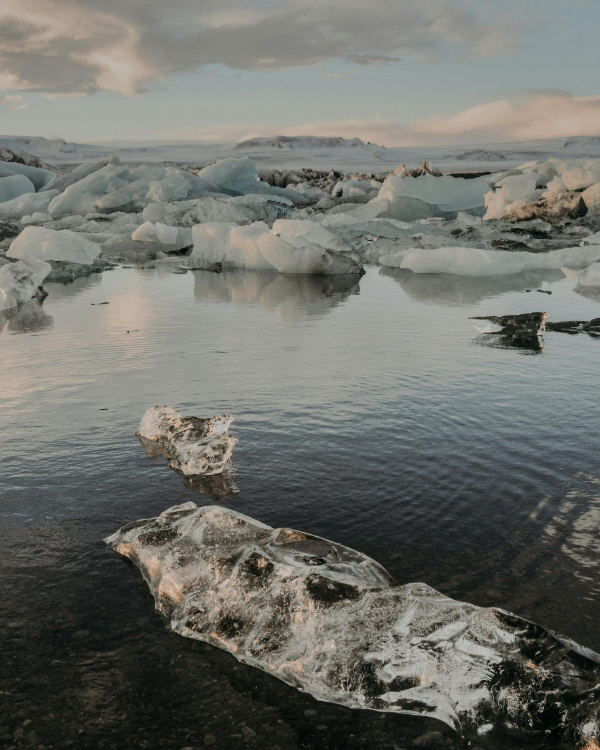
One reason postponement feels safe is because the future often appears abstract. Most people experience time through the rhythms of daily life: work schedules, bills, school terms, holidays and immediate responsibilities. The climate crisis, by contrast, unfolds across decades. This creates the illusion that meaningful consequences belong to some distant future rather than the present moment. But the future is not a separate place. It is built gradually through the accumulation of present decisions.
Every delayed policy.
Every postponed infrastructure project.
Every year, we increase our dependence on fossil fuels.
Every ecosystem is cleared for short-term economic gain.
These choices shape the world that future generations will inherit. The uncomfortable reality is that humanity is no longer discussing whether climate change will affect the future. It already is. The future we feared decades ago has begun arriving in fragments. More severe heatwaves. More unstable rainfall patterns. Longer fire seasons. Water insecurity. Insurance systems under pressure. Agricultural disruption. The conversation has quietly shifted from prevention to adaptation, often without fully acknowledging that shift.
The cost of delay is not equal
Another overlooked aspect of postponement is that its costs are not shared equally. The impacts of climate disruption rarely fall first upon the wealthiest or most protected members of society. Communities with fewer economic resources often face the harshest consequences earliest. Farmers confronting drought. Coastal communities facing erosion. Regions vulnerable to extreme heat. Countries with limited infrastructure resilience. Future generations also carry a disproportionate burden.
People alive today benefit from systems built on decades of resource extraction and carbon-intensive development. Yet many of the long-term consequences will be inherited by those who had little role in creating them. This creates a profound ethical challenge. Climate change is not only an environmental issue. It is also a question of intergenerational responsibility. What obligations do present generations have to people who do not yet exist?
How much damage is acceptable in exchange for temporary economic convenience? At what point does delay become a form of moral failure? These are uncomfortable questions because they challenge the assumption that progress should always prioritise immediate prosperity over long-term stability.
The psychological comfort of “later”
Part of the reason climate postponement persists is because “later” feels emotionally manageable. If change belongs to the future, people can continue living largely as they always have. The threat remains distant enough to avoid disrupting identity, routine or worldview.
This is psychologically comforting, but it also creates a dangerous disconnect between awareness and action. Many people intellectually understand the seriousness of climate change while emotionally treating it as background noise. The crisis becomes something acknowledged but compartmentalised. Something important, but not immediate. This disconnect helps explain why societies can simultaneously express concern about climate change while continuing behaviours that intensify it.
Human beings are remarkably capable of adapting psychologically to contradictions. Especially when those contradictions preserve short-term comfort.
What we lose while waiting
Climate conversations often focus on future catastrophe, but postponement is already costing humanity things that cannot easily be recovered.
Several species disappear permanently.
Ancient ecosystems degrade.
Coral reefs bleach.
Freshwater systems decline.
Cultural landscapes change.
Traditional ways of life become harder to sustain.
Not all losses can be measured economically. Some losses are emotional, cultural and ecological. A child growing up in the future may inherit a world where experiences once considered ordinary become rare or impossible. Snow seasons are shortened. Bird populations diminished. Forests altered by fire. Oceans warmer and less abundant. The tragedy of environmental decline lies not only in what disappears physically, but also in what disappears from collective memory. Over time, degraded conditions become normal. Future generations may never fully realise what was lost because they have never experienced the world before the loss.
The myth that action requires perfection
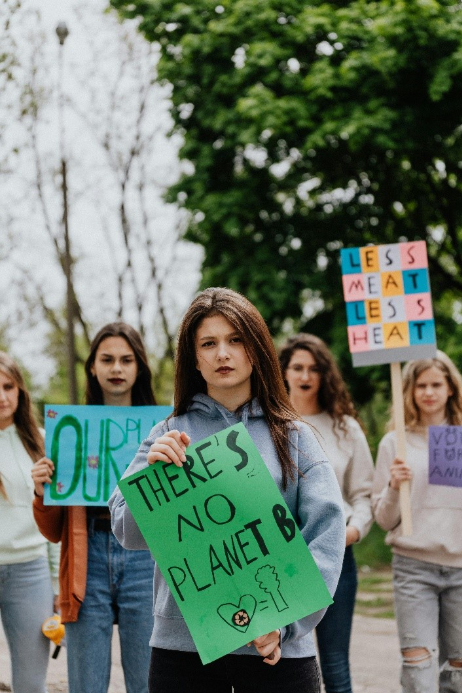
Another reason societies delay climate action is the belief that solutions must be flawless before implementation begins. Critics often point to imperfections in renewable energy systems, public transport infrastructure or environmental policy as reasons for inaction. But waiting for perfect solutions in complex systems is another form of postponement. No major societal transition has ever unfolded perfectly.
Industrialisation was imperfect.
Democracy is imperfect. Modern healthcare systems are imperfect. Progress usually emerges through adaptation, experimentation and continuous improvement rather than flawless planning from the beginning. Climate action will almost certainly involve mistakes, trade-offs and unforeseen complications. That is not an argument against action.
It is an argument for beginning sooner, while options remain broader and the consequences more manageable.
Reimagining progress
Perhaps the deeper issue beneath climate postponement is that modern society still struggles to define progress beyond consumption and growth. Economic systems are often evaluated through expansion: more production, more extraction, more consumption, more speed.
But infinite growth on a finite planet creates unavoidable tension. This does not mean abandoning prosperity or technological development. It means reconsidering what meaningful progress actually looks like. A stable climate. Resilient ecosystems.
Secure food and water systems. Healthy communities. Long-term sustainability. These are not obstacles to prosperity. They are the foundations that make lasting prosperity possible. The future will likely belong not to the societies that extract the fastest, but to those that learn to balance innovation with ecological stability.
The future is not waiting patiently
One of the most misleading assumptions about climate change is the idea that the future patiently waits for humanity to become ready. It does not. Climate systems continue changing regardless of political hesitation or public fatigue. Ecological thresholds do not pause while governments negotiate. The atmosphere does not distinguish between emissions released intentionally or emissions released because action felt politically inconvenient. Time continues moving forward whether societies prepare for it or not.
And with each year of delay, the scale of adaptation required becomes larger. The transition becomes harder. The costs rise. The options narrow.
Choosing a different relationship with time
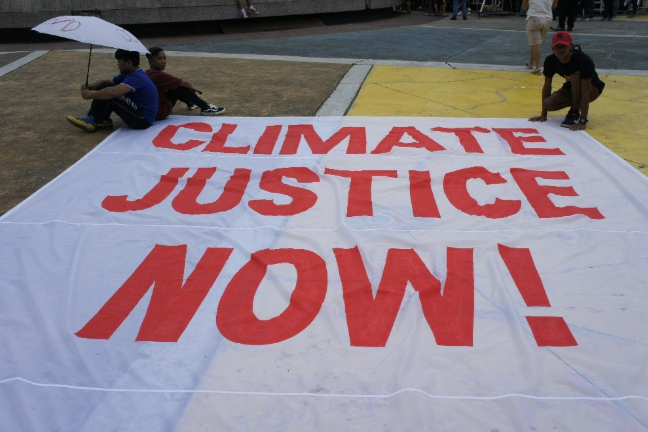
Perhaps what climate action ultimately requires is not only new technology or policy, but a different relationship with time itself. Modern culture often treats the future as something abstract and negotiable. But the future is not separate from the present.
It is the direct result of cumulative choices made day after day, year after year. The future we keep postponing is already arriving. Not all at once. Not dramatically every day. But gradually, steadily and increasingly visibly.
The question is no longer whether humanity can imagine a sustainable future. The question is whether humanity can stop delaying the work required to build it.
Because eventually, the future arrives whether society feels prepared or not.
And when that moment comes, history may look back less at what humanity knew and more at why it waited so long to act despite knowing.